

The old problem with event photo delivery
Every event photographer knows the post-event pain. You've shot 2,000 photos across a 4-hour wedding. Now you need to sort them, find which photos each guest appears in, create individual folders, and somehow get the right photos to the right people. It takes days and people still complain they didn't get their pictures.
What AI face recognition actually does
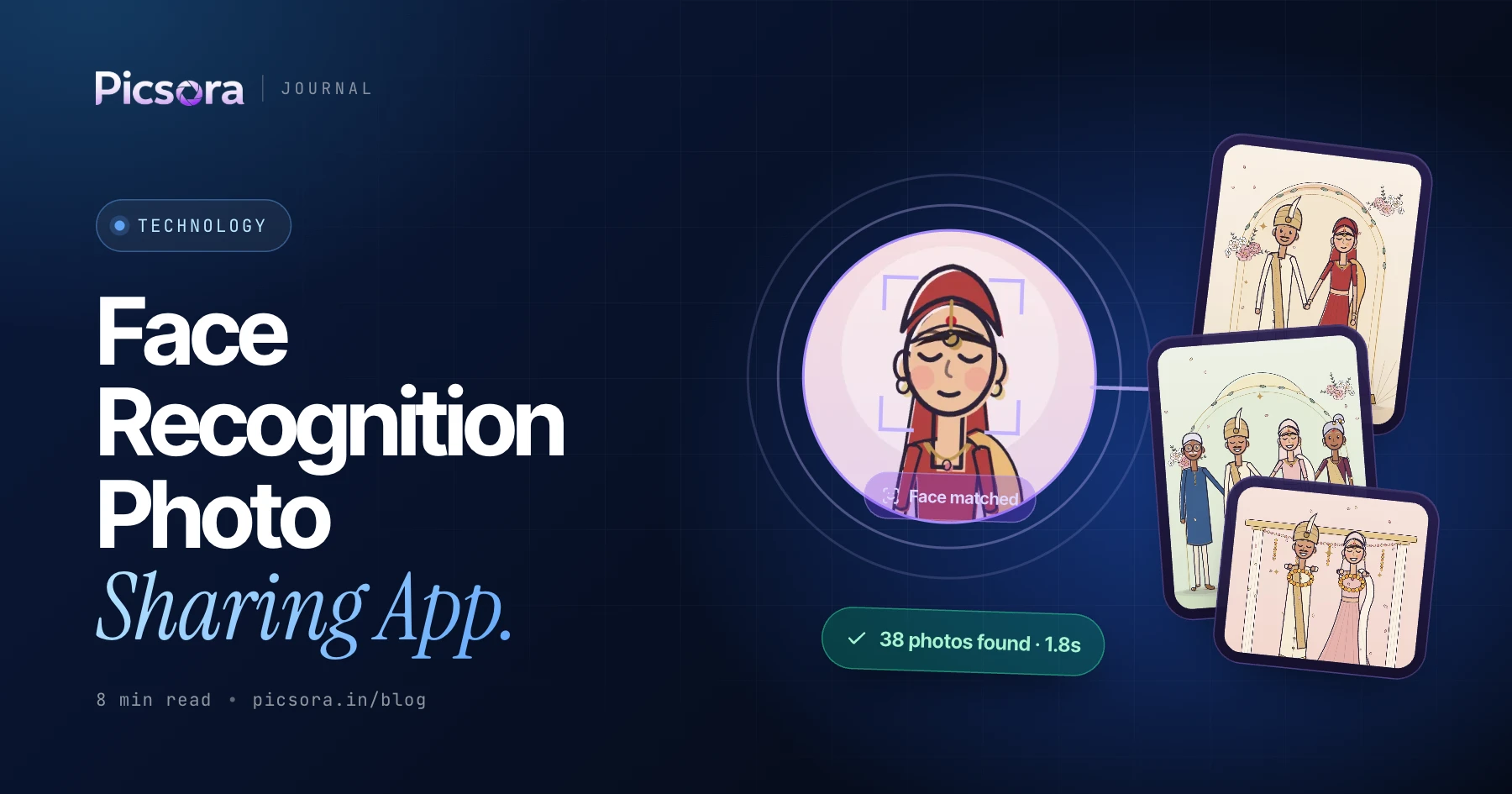
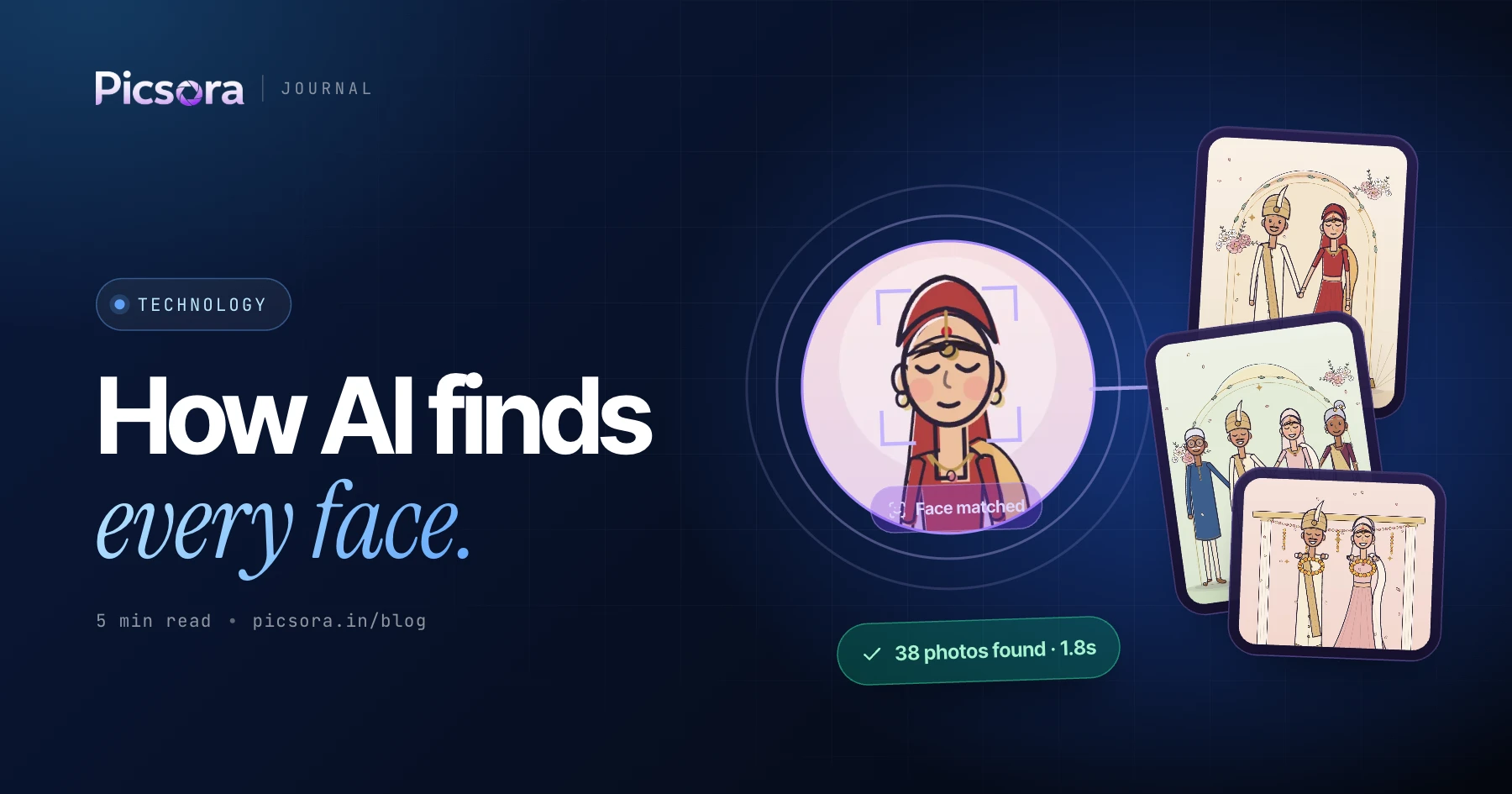
Modern AI face recognition doesn't just detect faces - it creates a mathematical 'fingerprint' (called a face embedding) for each face it finds. This fingerprint encodes the unique geometry of that face: the distance between eyes, the shape of the jawline, the proportions of facial features. Two photos of the same person will produce very similar fingerprints even if the lighting, angle, or expression is completely different.
- Face detection: locating every face in every photo
- Face encoding: converting each face into a 512-dimension numerical vector
- Face matching: comparing a new selfie against all stored vectors
- Threshold filtering: only returning matches above a confidence score
What makes Picsora accurate
Picsora's face matching is tuned for the real conditions of event photography - crowds, dim venues, glasses, masks, side angles and group shots. It is built to keep photos of the same person close together and photos of different people far apart, which is what gives Picsora its 99% match accuracy even across challenging conditions.
How the guest experience works
When a photographer uploads event photos to Picsora, the AI engine processes every face in the background - this typically takes a few minutes for a standard wedding gallery. Once complete, guests can access their photos immediately.
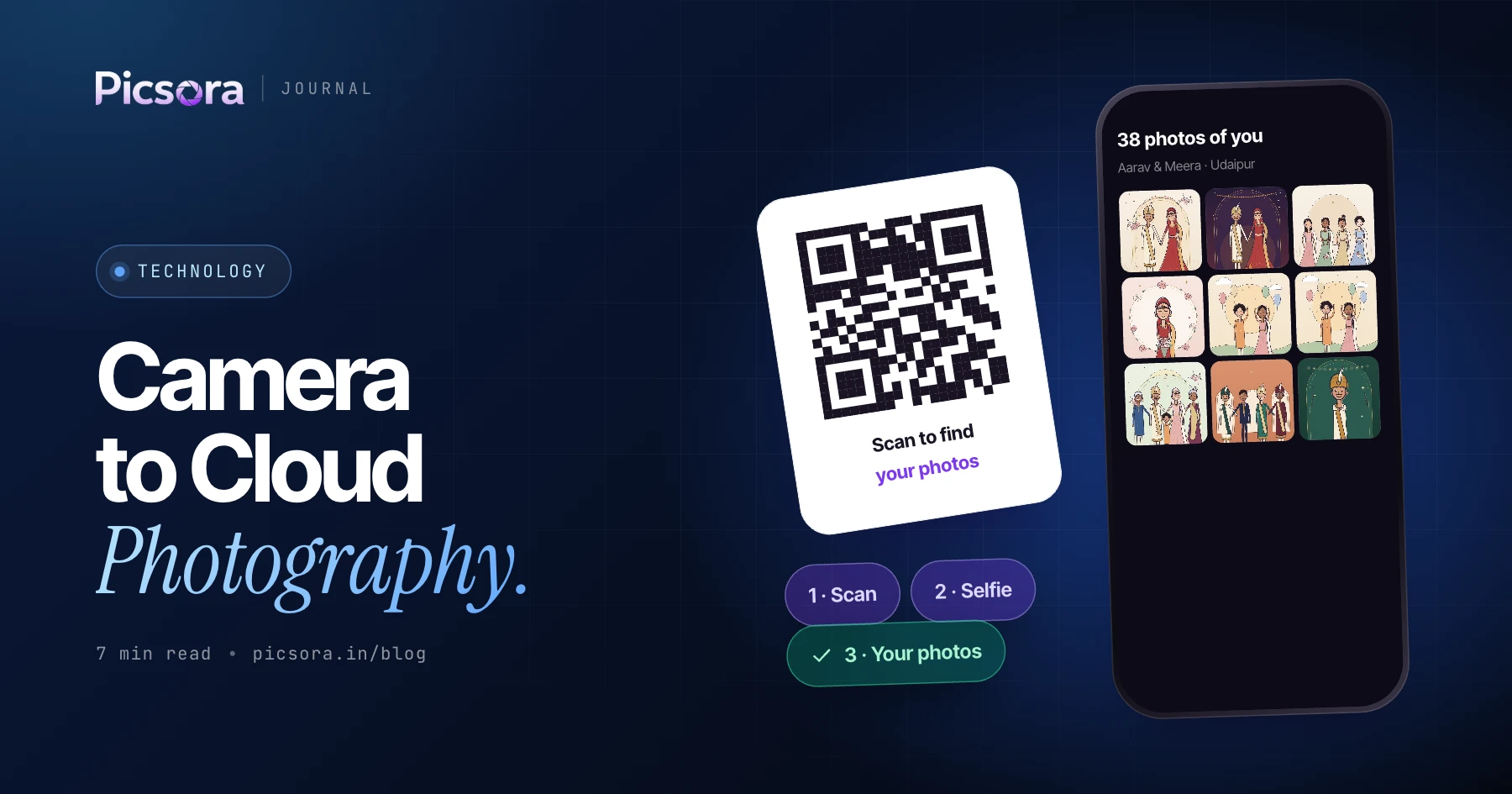
- Guest scans the event QR code with their phone camera
- Opens the event page in their browser (no app download)
- Takes a selfie - this is converted into a face embedding in real time
- The embedding is compared against all indexed faces in the event
- Matching photos are returned in under 2 seconds
- Guest sees a private gallery containing only their photos
Why accuracy matters so much
In event photography, a false positive - showing someone a photo of the wrong person - is far worse than missing a photo. That's why Picsora uses a conservative matching threshold. The AI only returns photos where it is highly confident the match is correct. Guests can also register family members (children, partners, parents) so the whole family's photos appear in a single gallery.
What happens to face data
Privacy is critical. Creating a Face Profile is entirely optional, and a guest can delete their selfies at any time. Face data is used only to match a guest with their photos at events they attend - it is never sold or used for advertising - and it is encrypted in transit and at rest. All biometric data is permanently deleted within 30 days of account deletion. Each guest sees only their own photos - no guest can access another guest's gallery.